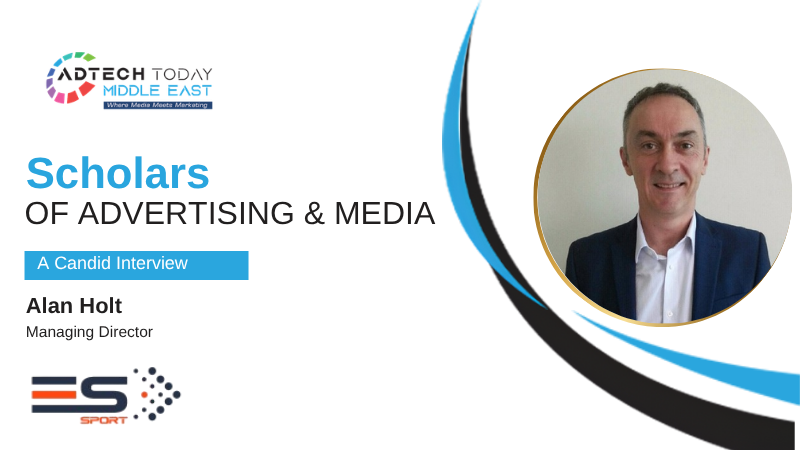
Alan Holt has spent over twenty years at the heart of global sports media. As Group Managing Director at ES Sport, he has been a key figure in the success of massive events like F1 Abu Dhabi and the UFC. Alan is a big believer in using technology to make life easier; however, he insists that “human magic” is what actually builds a brand. He sees a major shift happening in the industry. Brands are moving away from simple visibility toward deeper, more emotional connections.
In this exclusive conversation, Alan shares how he balances high-tech data with the simple need for a great story.
As the UAE Tourism Strategy 2031 takes shape, what is the single biggest media or marketing opportunity for the region that you believe international brands are currently underestimating?
The most underpriced opportunity is that the UAE is no longer just a venue; it’s fast becoming one of the world’s most powerful live sports storytellers. Too many brands still treat the region as a logo backdrop or a line on the sponsorship map. The real value is in plugging into the ambition of this place and turning events into serial content that lives long after the final whistle.
“The brands that win are the ones that make audiences feel what this region stands for, not just see their logo.”
What excites me is that the UAE Tourism Strategy 2031 isn’t just about more visitors; it’s about deeper, higher-value engagement with those visitors. If you’re a global brand, you can use live sport here as your stage to tell a bigger story—about innovation, hospitality, sustainability, or performance. Then distribute that narrative worldwide through smart digital content, social storytelling, and creator partnerships.
You work with global sporting assets like F1 Abu Dhabi and UFC. How is ES Sport helping brands extend the live stadium experience into the digital space, and what does this mean for the future of sports tourism?
Our job is to make sure the F1 Abu Dhabi or UFC experience doesn’t end when you leave the grandstand. ES Sport builds journeys where what happens in hospitality suites, paddocks, and fan zones becomes live and on-demand digital content that fans can tap into from anywhere. That ranges from behind-the-scenes access and live moments with talent, to digital collectibles and personalised follow-up content that keeps the emotion alive. For sports tourism, that changes the game.
“A race weekend or a fight night used to be a three-day spike; now it can be a 365-day relationship if you design it that way.”
Global fans can sample the atmosphere digitally and understand the experience before they ever book a flight. They feel part of a community. The thing is, this dramatically increases intent and repeat visitation; it builds the lifetime value of each trip. That’s where physical events become always-on, global demand engines for the destination.
How has the conversation around sponsorship evolved in recent years? Are brands now seeking different data points or performance indicators compared to five years ago?
Over the last few years, the real shift has been from exposure to evidence. Visibility is still nice, the thing is, the conversation has changed.
“Nobody is signing off seven-figure deals for logos and hope anymore”.
The conversation now starts with: who exactly are we reaching, how are they behaving, and what can we prove changed because of this partnership? Brands want sponsorships that plug into their data stack. They need clean audience profiles, clear engagement signals, and a line of sight to outcomes like preference, purchase, and loyalty. That’s where we come into play. We design platforms, not placements: integrated campaigns, content, hospitality and digital touchpoints that we can measure end to end. The most sophisticated clients are asking us less about “Where will my logo be?” and more on “How does this sponsorship move someone from first contact to lifelong fan?”
From a marketing perspective, how does the Abu Dhabi sports ecosystem differentiate itself within the GCC, and what should brands keep in mind when engaging this audience?
Abu Dhabi has managed to combine top-tier prestige with a very deliberate sense of ease and openness, and that’s unusual at this level. You can go from a world-class
track or arena to a beach, a museum, or a Michelin restaurant in minutes—and the experience feels seamless rather than staged. That blend of excellence and comfort is the city’s real competitive advantage in the region.
For brands, that means you’re speaking to an audience that is globally savvy. They are used to high standards, and quick to spot anything that feels transactional or superficial. If you show up with a generic sponsorship, you’ll disappear into the noise. If you show up with experiences that feel tailored to this place—its culture, its ambitions, its pace—you cut through very quickly. The sweet spot is campaigns that feel locally aware but globally fluent: something that makes sense to a fan in Abu Dhabi and still resonates when they share it with friends in London or Mumbai.
With rising demand for premium hospitality and bespoke travel experiences, how has this shift influenced your approach to audience targeting and media strategy?
“Premium hospitality has shifted from “nice-to-have add-on” to “core product” for a big part of our audience.”
These guests are not buying a ticket; they’re buying time, access, and a story they can’t get anywhere else. That forces us to think in micro-segments—family groups, C-suite decision-makers, high-intent fans—each with its own media, messaging, and experience design.
On the media side, we’re far more surgical now. We combine tightly targeted digital campaigns with direct relationship-building, partner databases, and referral networks, so the right people see the right offer at exactly the right moment in their decision journey. And once they’re in the ecosystem, the goal is to turn one-off trips into repeat behaviour, using post-event content, personalised follow-up and loyalty mechanics that make them feel known, not just sold to.
What is one leadership principle or operational lesson you would share with agency leaders looking to remain agile in uncertain market conditions?
If I had to pick one principle, it would be:
“Build your business to be permanently in beta.”
The temptation in agencies is to lock into a model that worked once and defend it; in tourism and sport, that’s the fastest way to become irrelevant. The organisations that win are the ones that treat change as their normal operating condition, not as
an exception.
Practically, that means empowering people closest to the work to make decisions, running more small experiments than big bets, and being willing to retire old ways of working even if they’re still comfortable. You need just enough structure to move fast, not so much that you can’t turn. If your team understands the mission and feels trusted to adapt, you stop fearing disruption and start using it as a source of momentum.