
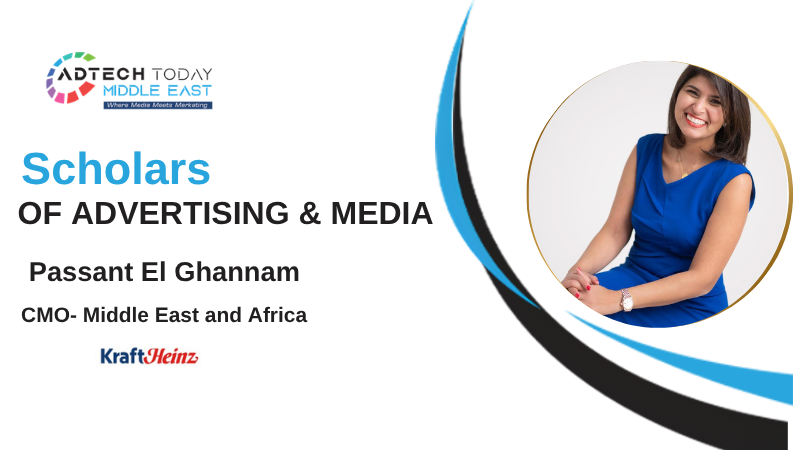
Bold, insightful and deeply consumer-centric, Passant El Ghannam has built a career transforming brands through cultural relevance, creativity and genuine consumer understanding. As CMO of Kraft Heinz for the Middle East and Africa, her philosophy of Big Little Acts reflects a simple conviction: that meaningful brand growth is earned through small, culturally sharp ideas that people genuinely care about, not through the size of the budget behind them.
In this exclusive interview with AdTech Today, Passant shares the experiences that shaped her leadership philosophy, explains why she calls AI “the fastest intern I’ve ever had,” discusses how global brands can connect authentically with local audiences, and explores why long-term brand building will remain a defining competitive advantage in the Middle East.
You’ve built your career championing bold, culturally relevant marketing across the MENA region. What experiences have most shaped your philosophy as a marketer?
There’s a pattern I didn’t design, but can now clearly see. I’ve almost always been handed the small brand, the struggling one, the business nobody was fighting over. That shaped everything about how I work.
When you inherit something fragile, you can’t coast on category momentum or brand equity. You have to find the reason someone should care, internally and externally, and that takes real perseverance against the no, plus a fairly ruthless pursuit of insight to get to growth.
I’ve rarely had the luxury of buying attention, so I learned to earn it. I became a believer in what I call Big Little Acts: the small, sharp, culturally precise activations that, stacked together, punch far above their spend. When you can’t outspend, you have to out-think.
“Big budgets don’t win today. Big little acts do.”
And people make the difference. This is the one I’d defend hardest. Consumers, teams, partners. Data tells you what happened; people tell you why. I’ve never seen a brand grow because of a deck. I’ve seen brands grow because someone believed in an idea, and someone else believed in them.
Q2. At Cannes Lions, you spoke about creativity as a driver of growth and AI as an accelerator. How do you ensure AI enhances creativity rather than replacing the human instinct behind great ideas?
I’ve said it before: AI is the fastest intern I’ve ever had, but it’s still an intern.
Brilliant, tireless, endlessly available, and in need of direction. That’s not a criticism. It’s a job description.
Used well, AI is an extraordinary accelerator. It clears the mundane, it shortens the distance between having a thought and pressure-testing it, and it creates room for the thing we’re always short of: time to actually think.
But here’s the limit I’d hold firmly. AI is, by design, the average of everything that has already been said. It’s very good at what exists. But it isn’t original. It can synthesise data, spot patterns, surface correlations. It cannot tell you what any of it means to a person. That leap, from pattern to truth, is ours.
Great creative work isn’t a synthesis of the past, it’s a leap forward. It’s the connection of things that were always there but never joined. It’s a feeling you’d had before but could never name. It’s an insight coming into the light. And that has to stay one hundred percent human.
The Hum Hum campaign started with a very specific consumer frustration. In an era where marketers have more data than ever, do you think genuine consumer insight is becoming rarer, and is insight-led creativity still underutilised in the MENA region?
I don’t believe true insight is rare, least of all here. The MENA consumer is deeply emotional. We love loudly, we feel strongly, we connect deeply. That’s not a challenge to marketers, it’s a gift. The raw material of insight is everywhere. The real question is whether brands are brave enough to find a meaningful way to live inside that emotional fabric, rather than hovering above it. And I’d push back on any idea that the region lacks the craft to do it. Our creative industry is strong, and it’s increasingly being recognised on the global stage.
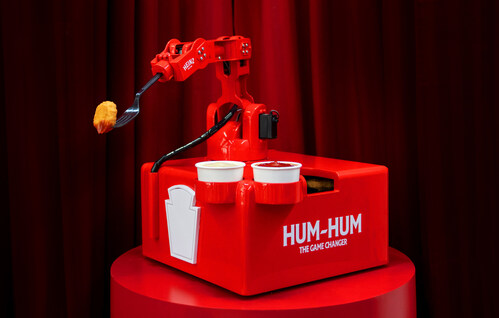
Hum Hum is a good example of how simple real insight can be. The brief was almost innocent: how do you connect with gamers without stopping the game? Underneath it sat a genuine, human frustration. You can’t pause when you’re hungry, and you can’t enjoy your Heinz while your hands are on the controller. So we built the answer. An electronic snack feeder that dips your food in your Heinz and delivers it with the push of a foot pedal. Full flavour, no pause. The insight did the work. We just listened.
MENA is one of the world’s most diverse markets. How do you decide when a global campaign can travel, and when it needs to be created specifically for the region?
I believe a global brand should look and feel like itself everywhere. True success is when you can’t tell which country a campaign came from. But the higher bar is when the brand speaks like a local while holding its international character.
My favourite articulation of that came not from an agency but from a consumer in an Egyptian research session. Asked whether Heinz felt Egyptian, she said
“He’s Egyptian, but his grandparents are foreigners.”
He speaks local Egyptian, yet he has Western roots. That’s the balance: the warmth of a local brand with the iconicity of a global one. No wonder Egypt holds the highest Heinz brand equity in the world. On campaigns, I see three tiers. Some are universal human truths, and those travel effortlessly.
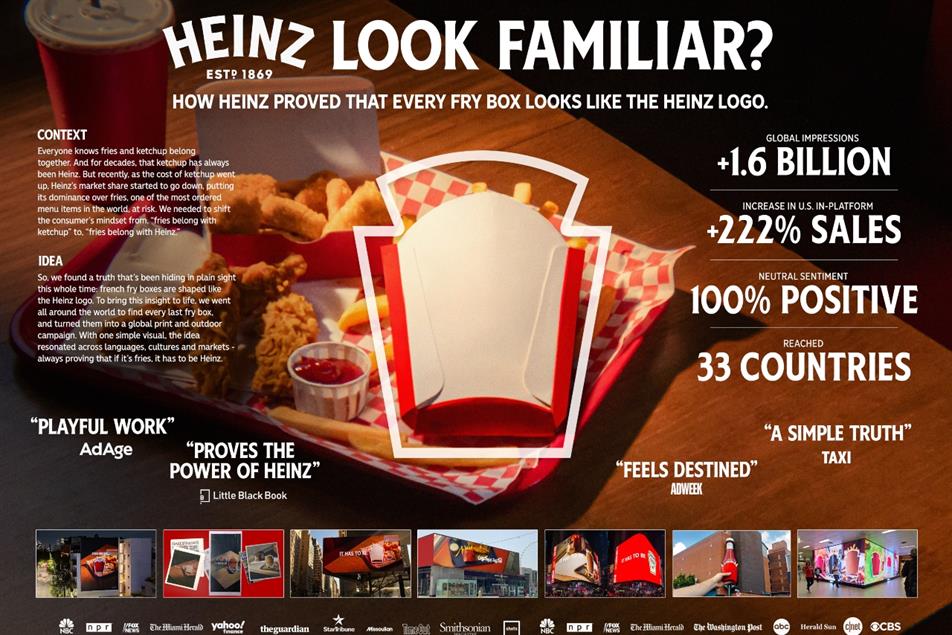
For instance, our Cannes Grand Prix win for Looks Familiar, an idea so simple you can’t unsee it. It ran in Canada, China, the US, and here, and you genuinely can’t tell which market it’s from. Others travel on idea or platform but need executional craft per market. And some are pure local insight, which is completely fine, as long as they uphold the global brand’s tone of voice.
With economic and geopolitical uncertainty putting pressure on marketing budgets, how does Kraft Heinz decide where to keep investing? Has that approach changed over the past few years?
At Kraft Heinz, we believe in the power of brand building, and one of our core values is being consumer-obsessed. So when times get tough, our instinct isn’t to pull back, it’s to double down. We listen more closely, we innovate more boldly, and we keep investing in our brands to fuel growth.
“Pulling spend in a downturn can feel prudent in the moment, but it’s usually how brands quietly surrender the ground they spent years earning.”
Growth doesn’t wait for certainty. That said, doubling down isn’t the same as charging ahead blindly. In a region as culturally and geopolitically layered as ours, you have to stay sensitive to your surroundings. There’s a difference between showing up consistently and showing up tone-deaf. The discipline isn’t only about how much you invest; it’s about how you show up: with authenticity, with the right tone, and with genuine awareness of what people are living through. Consumers can tell the difference between a brand that’s present and one that’s just spending. Our job is to keep earning the right to be in the room, especially when the room is tense.
Looking ahead, what do you think will define the next chapter of marketing in the Middle East? And what’s one capability you believe most brands in the region are still underinvesting in?
The next chapter will be defined by AI that speaks the culture, not just the language. It’s not enough for a model to translate Arabic. It has to understand our colloquial dialects, feel the nuance, and play it up rather than flatten it. The Middle East isn’t one big region: it’s a sum of parts, and each part is distinct and worth celebrating in its own right, while still adding up to one scalable, global growth driver. That nuance deserves to be heard, understood and celebrated on the world’s biggest stages, not smoothed into a generic regional average.
As for what we’re still underinvesting in: long-term brand building. Too many brands here have tilted almost entirely toward short-term performance marketing, chasing the immediate conversion, the quarter, the click. It works, until it doesn’t.
“Performance harvests demand; it rarely creates it.”
The brands that will win the next decade are the ones with the patience and conviction to build meaning over time, to invest in being remembered and not just being clicked. That discipline is rarer than it should be, and it’s the single biggest opportunity in the region.

- EMIR and Omnicom Media MENA Partner to Amplify GCC Thought Leadership - September 9, 2026
- We Are Now Using AI To Fire Customers For Our Own Bugs - September 8, 2026
- Initiative Appoints Darine Elkaissi as Managing Director in Saudi Arabia - September 2, 2026