

UAE consumers are increasingly turning to artificial intelligence to navigate major shopping sales, but remain reluctant to hand over control of their purchases, according to a new YouGov report ahead of the 2026 Dubai Shopping Festival (DSF).
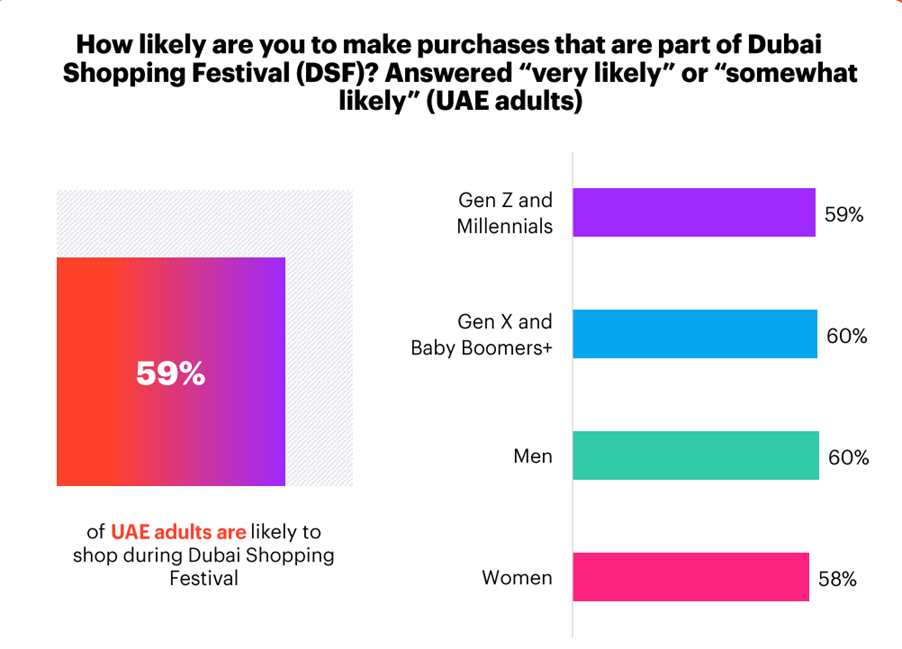
Nearly six in ten UAE adults (59%) say they are likely to shop during DSF, with interest broadly consistent across generations and genders. Among these prospective shoppers, 58% have already used AI tools to help them shop, compared with 47% of UAE adults overall.
AI use is also expected to grow during this year’s festival. Three-quarters of likely DSF shoppers (75%) say they are likely to use AI to make the festival easier to navigate. Among those who used AI during last year’s sales, 87% expect to use it as much as or more than before. A further 32% of likely DSF shoppers expect to start using AI this year, having not used it last year.
Shoppers are comfortable using AI to find deals, but less so to make purchases
Likely DSF shoppers are most comfortable using AI to find the best price (42%). A further 35% are comfortable using it to summarise reviews, while 34% would use it to track price changes.
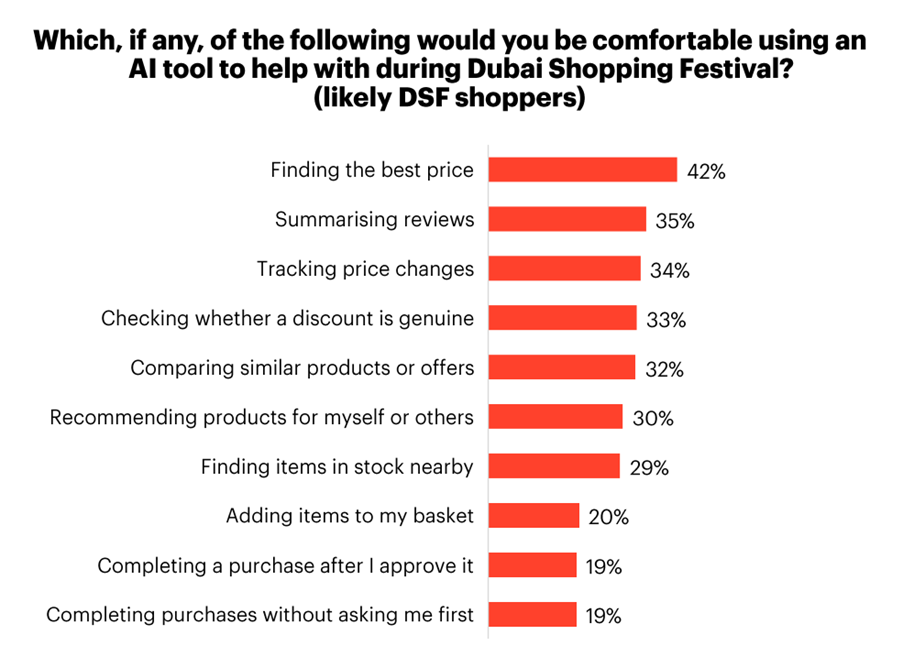
Comfort declines when AI moves closer to completing a transaction. Just 20% are comfortable with AI adding items to their basket, while 19% would allow it to complete a purchase after their approval. The same proportion would be comfortable letting AI complete purchases without asking them first.
The findings suggest an opportunity for retailers and brands to use AI to help consumers discover products and evaluate offers, while ensuring shoppers retain control over their spending decisions.
ChatGPT leads among AI tools shoppers plan to use
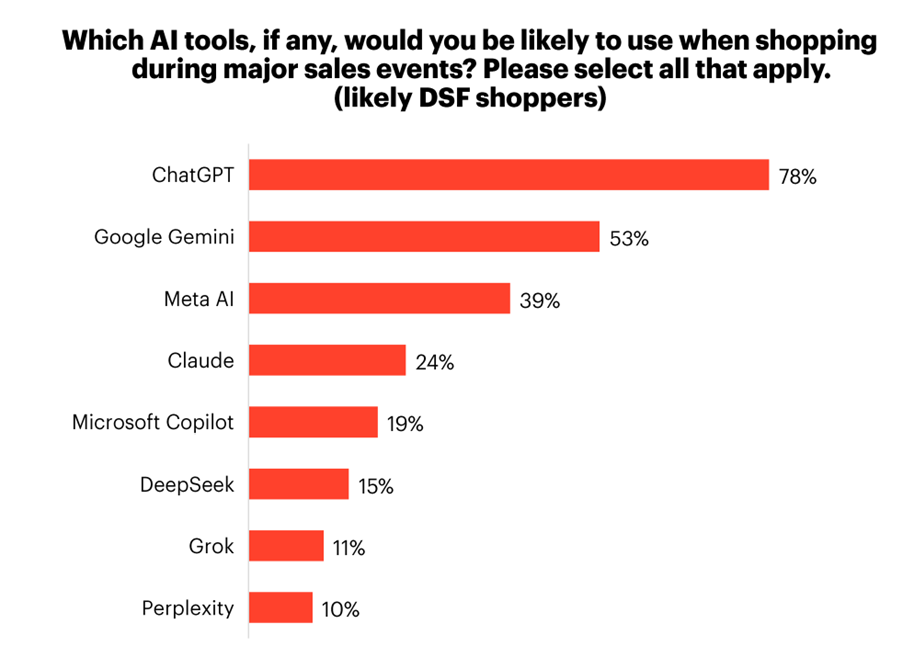
Among likely DSF shoppers, ChatGPT is the most frequently selected AI tool for use during major sales events, cited by 78%. Google Gemini follows at 53%, while Meta AI ranks third at 39%. Claude is selected by 24%, ahead of Microsoft Copilot at 19%.
Transparency and control could encourage AI-assisted shopping
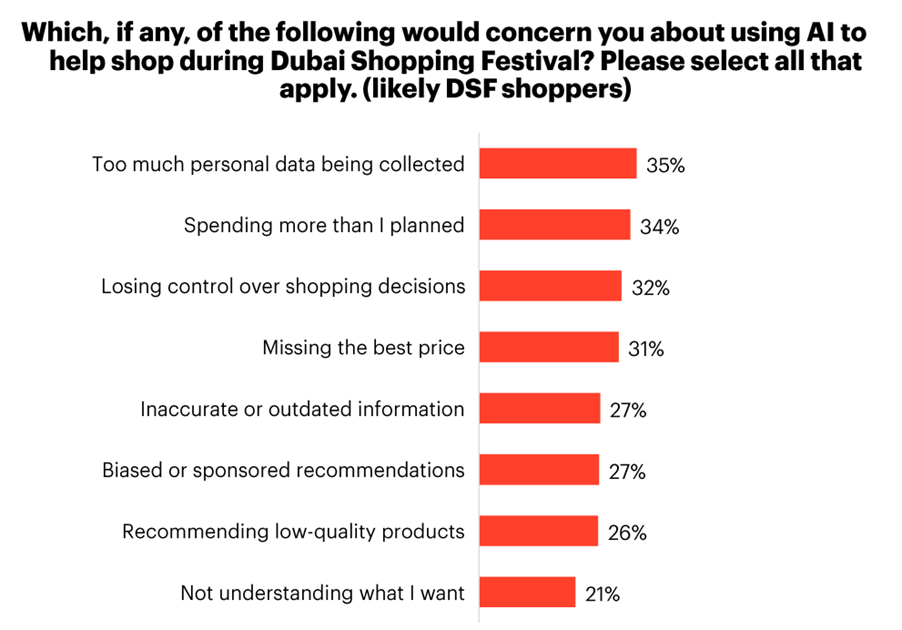
Despite growing adoption, consumers have clear reservations about using AI for shopping. The most commonly cited concerns among likely DSF shoppers are excessive collection of personal data (35%), spending more than planned (34%) and losing control over shopping decisions (32%). Nearly a third (31%) worry about missing the best price.
Shoppers also identify specific features that could make AI-assisted shopping more reassuring. A best-price or money-back guarantee on recommendations is the most frequently selected, at 37%. Comparing prices across retailers and explaining recommendations follow, both at 35%.
As AI becomes more embedded in the shopping journey, its immediate opportunity may lie less in automating the entire transaction and more in helping consumers make better-informed decisions.