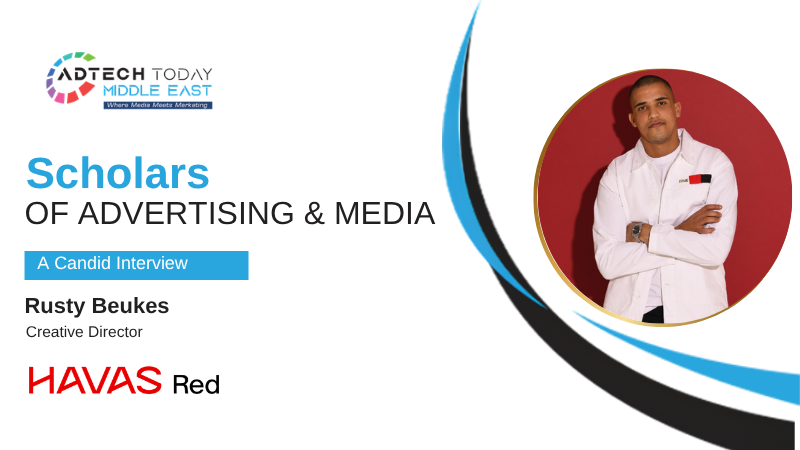
With over two decades in the creative industry, Rusty Beukes has built a reputation for ideas that live beyond campaigns. As Creative Director at Havas Red Middle East, he works at the intersection of PR, creativity, and culture; a space where brands must earn attention rather than buy it.
In his exclusive conversation, Beukes reflects on earned-first thinking, the growing importance of taste and judgement in the AI era, and why brands that show restraint and cultural fluency will ultimately stand out.
Your creative journey has moved beyond traditional advertising toward an “Earned-First” philosophy. What was the pivotal moment that convinced you that a brand must earn its place in culture rather than simply buy attention?
I do not think it was a single moment so much as a set of behaviors leaning that way. Audiences are far more literate now than they used to be; they have a clear window into how the industry works thanks to platforms like TikTok. They understand exactly how campaigns are constructed; they know where the money sits and what the agenda behind it all is. That awareness has completely changed the rules. And you can feel it when something has not been earned; you can tell when a brand is just borrowing cultural cues rather than genuinely contributing to the ecosystem. Earned-first thinking came from realising that you are only granted that space when the work is useful, honest, or culturally fluent. Anything else just passes right through people without leaving an impact. At the end of the day, it is really about meeting consumers where they already are.
At Havas Red ME, you operate at the intersection of PR and creative. How do you approach building ideas that don’t just look compelling, but generate real social currency and spark meaningful conversation?
I start by looking at how brands behave when they don’t have these big moments. If the answer only exists during “big moments,” the ideas usually don’t travel far.
I believe in building systems that fit into the long-term strategy. The work, for me, is less about inventing noise; it’s all about making the bigger moments accelerators and not stand-alone moments.
“Social currency comes from coherence.”
When people can recognise a brand’s point of view over time, conversation follows naturally because it feels grounded rather than opportunistic.
The Middle East has emerged as a global hotspot for bold, high-impact creative work. How do you balance the global standards of the HAVAS network with the fast-evolving cultural nuances of markets like the UAE and Saudi Arabia?
The HAVAS Red Global network gives my work a sense of structure, resources, and ambition. But I have learned that culture doesn’t respond to frameworks alone, especially in these markets.
In places like the UAE and Saudi Arabia, things move quickly, but not in isolation. There’s always a strong sense of ritual, timing, and context.
The hack is treating global frameworks as tools, not templates. The question isn’t “does this work globally?” but “does this feel true locally?” When something is genuinely rooted in behaviour, language, or lived experience here, it often travels outward anyway.
“Cultural specificity is no longer a limitation; it’s what gives the work credibility on a global stage.”
Your career includes recognition at Cannes Lions and D&AD. Beyond the accolades, how has the discipline required to achieve that level of excellence shaped your philosophy on what makes a brand truly meaningful today?
Awards teach you discipline, but they also expose shortcuts. You quickly learn the difference between work that’s clever and emotional and work that’s complete. The pieces that last, creatively and culturally, tend to be the ones built on restraint and for the long haul.
That’s shaped how I think about meaning. A meaningful brand isn’t one that says the most, or even the loudest thing. It’s one that knows what to protect, its values, its tone, and its role, especially when it would be easier not to.
“Excellence today is less about spectacle and more about consistency and patience.”
In 2026, with generative AI now embedded in most creative workflows, what human skill has become more valuable than ever in ensuring campaigns retain emotional depth and authenticity?
Taste. And that’s a big word in my world.
“AI can generate the work, but it can’t feel the consequences.”
It doesn’t know what should be held back, softened, or left unsaid. Emotional depth doesn’t come from volume or capability; it comes from personal frames of reference and from recognising when something is technically impressive yet emotionally empty.
We saw this play out in the reaction to Gucci’s recent AI work, led by Demna, the house’s Creative Director.
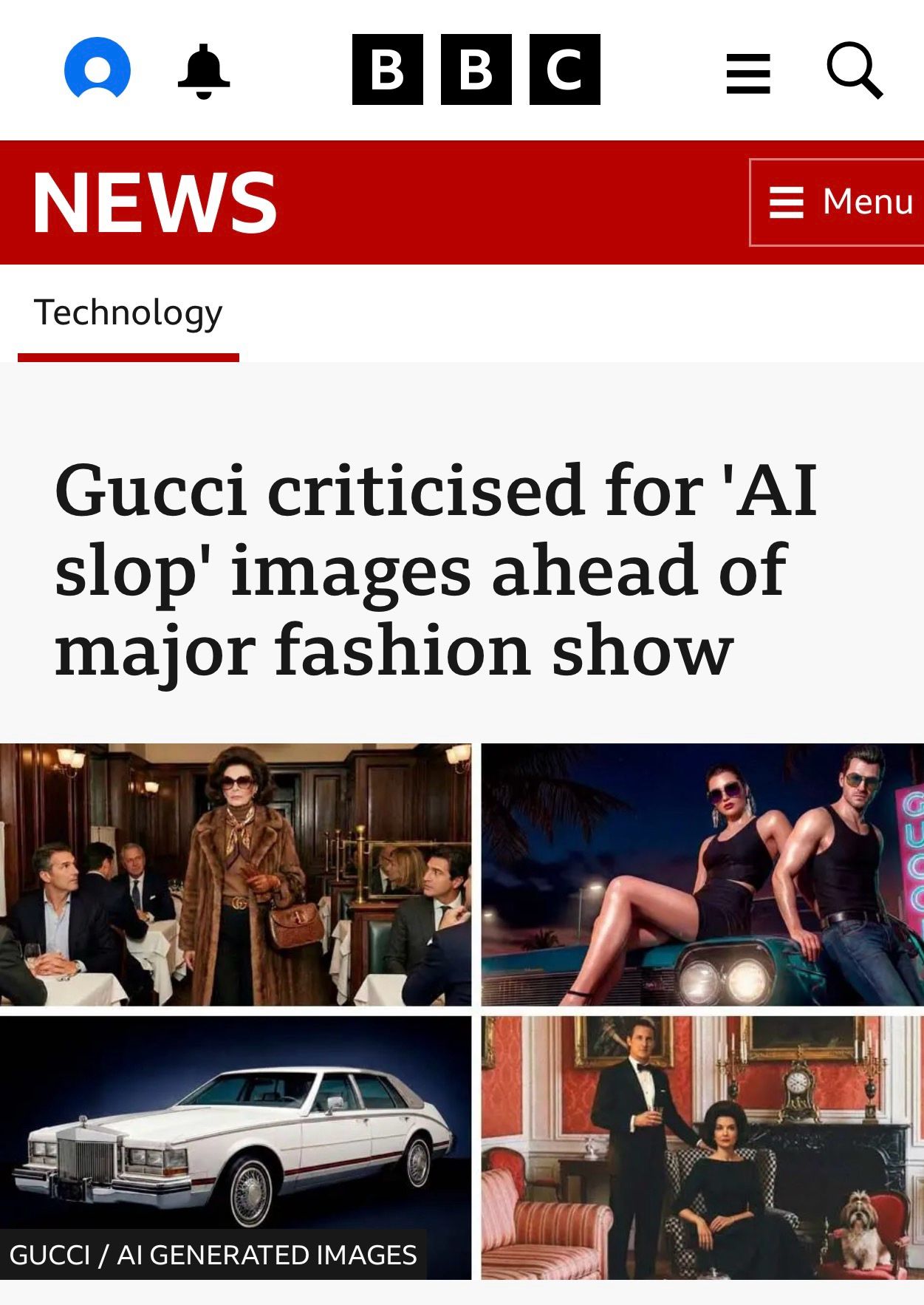
Image Credit: BBC
The internet wasn’t debating the technology; it was questioning the judgment. The backlash wasn’t about innovation; it was about tone, context, and whether the work earned its place in the cultural moment. That’s a human problem, not a technical one.
So the human skill that matters most now is judgment shaped by lived experience. Understanding context, reading the room, and sensing the moment when something shifts from relevant to performative. That kind of awareness isn’t programmable, and it’s not something you can ask a machine to do.
Looking toward 2030, do you see “Brand Entertainment” fundamentally reshaping traditional advertising in the MENA region—and what will separate the brands that succeed from those that simply produce more content?
Brand entertainment will absolutely reshape the landscape in the near future, in this region as much as globally. Volume won’t be the differentiator, though. This region already produces work at serious scale; what’s still rare is the intention behind it.
You can clearly see the difference in how certain brands operate here. Activations like Prada Mode in Abu Dhabi, or Bottega Veneta’s cultural programmes in the region, don’t behave like campaigns. They behave like temporary worlds rooted in art, dialogue, and local context rather than chasing attention spikes.
That’s the separation point for me.
“The brands that succeed will understand entertainment as a relationship, not a format.”
They’ll invest in cultural presence that unfolds over time, not just bigger moments for the sake of reach. And increasingly, audiences here already know the difference.
Read more: Gautam Bhirani on Trust, Technology and Global DOOH