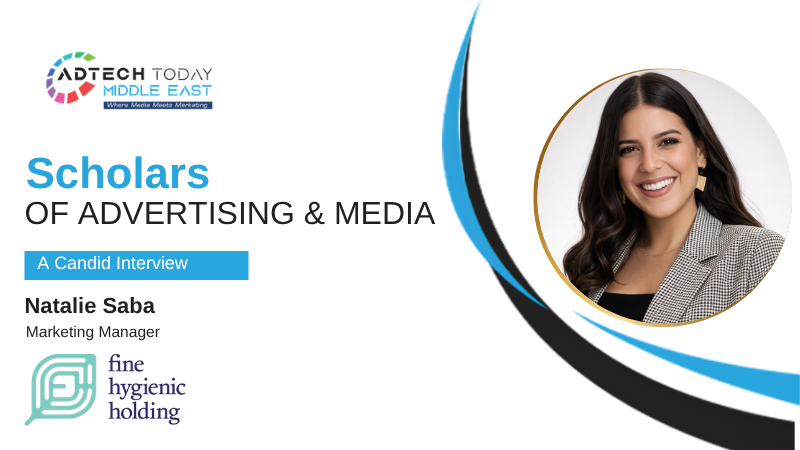
Natalie Saba started working at fifteen, long before she imagined a career in brand building. What began as curiosity evolved into a lifelong love for understanding people — what moves them, and why they choose the things they do. From witnessing culture-led branding at Red Bull to driving digital transformation at Samsung, she has always believed great marketing sells emotion, not product.
Now as Marketing Manager for the Levant at Fine Hygienic Holding, she continues to champion that belief. In this exclusive interview, Natalie shares her storytelling-first philosophy, the power of empathy in FMCG marketing, and what she believes will define the next era of the industry.
You recently highlighted that marketing connects ideas to real human experiences. How did your early career path shape this storytelling-first approach?
“I think my love for storytelling came from life, not textbooks.”
I started working at fifteen — anything I could find — and every job taught me something about people. What drives them, what inspires them, what makes them choose one thing over another.
When I joined Red Bull, I saw how energy could become culture — how a brand could make people feel part of something bigger. That stuck with me. Later, when I taught myself digital marketing, I fell in love with the idea that stories could now be told interactively — not just to people but with them.
At Samsung, I learned how to blend creativity and data to move people on a massive scale. And now at Fine, it’s come full circle. Whether it’s tissues or diapers, what we’re really doing is connecting emotion to everyday life. Because the best marketing doesn’t sell — it touches.
Beyond trusting your instincts—which you have championed as vital for leaders—what strategic or analytical skills do you find most critical for FMCG marketers today?
Instinct is your compass, but curiosity is the engine. In FMCG, you need both to survive. Markets shift quickly, and consumers evolve even faster. The ones who adapt are the ones who listen.
Today’s marketer needs to be part analyst, part storyteller. Data is everywhere, but it’s not just numbers,it’s people’s habits, frustrations, and aspirations disguised as metrics. The real skill is being able to look at a dashboard and see emotions behind the figures. That’s what separates campaigns that fade from those that connect.
“When you combine empathy with insight, you’re no longer reacting to the market — you’re shaping it.”
In your current capacity, how do you translate broad consumer insights into actionable, authentic narratives that resonate on a personal level?
I start by humanizing data. Behind every click, every statistic, there’s a small human story. My job is to bring that story to life.
At Fine, we look for what I call emotional entry points. For instance, Fine Baby isn’t just about diapers — it’s about reassurance for new parents, that feeling of “you’ve got this.” Fine Tissues isn’t just paper; it’s comfort and care in the smallest moments that matter.
When a marketing story honors that kind of real emotion, it shifts from communication to connection. That’s when people don’t just remember your brand — they invite it into their homes and daily rituals.
Operating within highly dynamic and rapidly changing markets, how do you adjust your localized engagement strategies to align with shifting consumer priorities and brand resilience?
The Levant is full of contrasts — tradition meets modernity every day. To navigate that, you have to listen deeply.
“Markets here aren’t just driven by trends; they’re driven by emotion and values.”
At Fine, we engage locally, emotionally, and meaningfully. We don’t just translate words; we translate feelings. Whether it’s a social campaign or a product message, it has to sound like it belongs in the room with the consumer.
Resilience comes from empathy — from treating your brand like a person that evolves with the culture around it. When your communication respects that rhythm, consumers don’t just stay loyal; they become part of the brand’s journey.
The wellness and hygiene sector is evolving constantly. What major growth avenues or consumer needs will likely drive the broader MENA market next?
People in the region are redefining wellness. It’s no longer just about clean hands or a healthy body — it’s about emotional safety, peace of mind, and self-respect. There’s a deeper need for trust now, especially after recent years.
Consumers are becoming more conscious. They want transparency, sustainability, and authenticity. Brands that deliver real value, not just a selling story, will lead the change.
At Fine, we see hygiene and wellness as emotional anchors in people’s lives. It’s care and comfort at once. The growth ahead won’t come from being louder, it’ll come from being truer.
As brands shift heavily toward empathy-driven marketing, what emerging industry trend excites you the most?
“What excites me is that marketing is finally coming back to what it was always meant to be — human.”
For a while, it felt like we were chasing algorithms instead of emotions. But now, the shift is toward storytelling that’s raw, real, and grounded in empathy.
Brands today are embracing imperfection. They’re showing vulnerability, humor, even failure — and that’s what people connect to.
“What I love is how emotional intelligence is becoming the new KPI.”
Creativity and empathy are driving results as much as performance metrics ever did. As a marketer, it reminds me why I fell in love with this field: because when you tell a story that moves someone — even for a second — you’ve already made a difference.