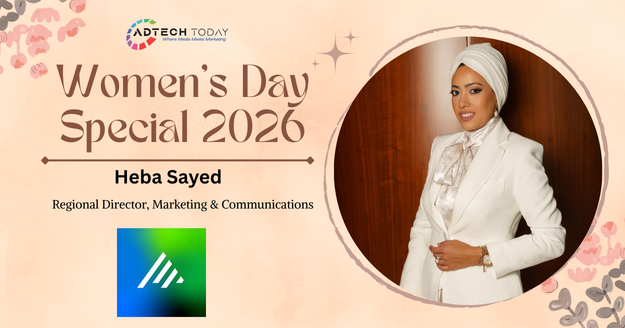
The Middle East and Africa are undergoing one of the most ambitious digital transformations in the world. In this personal reflection, Heba Sayed shares insights from more than two decades in technology—navigating leadership, challenging perceptions, and shaping growth across a rapidly evolving region.
Over more than 20 years working in the technology industry across the Middle East and Africa, I have had the privilege of building growth strategies, leading marketing and go-to-market functions, and working at the forefront of AI, cloud, and cybersecurity. During that time, our region has undergone a profound digital transformation. Entire sectors have been reimagined under ambitious national visions, and technology has become central to economic diversification and national resilience. Yet while the industry has advanced at remarkable speed, the journey toward balanced representation in leadership has been more complex.
Navigating Perception, Credibility, and Visibility
Working in a male-dominated sector has presented challenges that are often subtle rather than overt. One recurring obstacle has been perception. As a woman in technology, and particularly in marketing within technology, I have at times had to correct assumptions that my role was primarily tactical or event-driven, rather than strategic and revenue-focused. In reality, effective marketing in enterprise technology demands deep customer understanding, commercial alignment, and measurable impact. Establishing credibility required consistently demonstrating how strategy translates into pipeline growth, market expansion, and long-term value creation.
In the GCC context, cultural nuance adds another layer. Humility is deeply valued in our societies. Many talented women are raised to prioritize modesty and diligence over self-promotion. While these traits are strengths, they can also lead to quiet excellence that goes unnoticed. I have seen capable women assume that their work alone will secure advancement. Often, it does not. Organizations must become more intentional in identifying high-potential talent that may not self-advocate loudly. At the same time, women must learn that articulating ambition and stepping into visible roles is not arrogance or greed; it is leadership. Humility should never translate into invisibility.
Turning Pivots into Progress
A defining inflection point in my career came during my time at IBM. After leading multiple marketing functions successfully, I was challenged to step outside my established path and take on the role of leading strategy development and execution for AI and Hybrid Cloud across the Middle East and Africa. At that time, both fields were still emerging in the region. The shift required me to expand beyond marketing metrics and immerse myself in business modeling, ecosystem development, regulatory considerations, and competitive strategy. It brought me closer to customers and sharpened my commercial acumen.
Shortly thereafter, I accepted a strategic sales role, despite not viewing myself as a natural salesperson. That decision was transformative. Sales demands resilience, structured thinking, and a relentless focus on customer outcomes. I learned to lean on my strengths, often relying on preparation, process, and a genuine passion for understanding client challenges. By doing so, I discovered strengths I had not previously associated with myself. That experience made me a more complete executive, blending strategic vision with commercial execution. It also reinforced an important lesson: growth often lies just beyond the boundaries of comfort.
Mentorship and sponsorship have been central to navigating these transitions. Throughout my career, I have benefited from leaders who offered candid feedback and advocated for my advancement. Today, I view mentorship as a responsibility. In the Middle East, women are strongly represented in Science, Technology, Engineering, and Mathematics (STEM) education, yet executive leadership numbers remain disproportionately low. This is not a question of capability; it is a matter of progression, exposure, and structural support. Organizations must move beyond hiring targets and focus on retention, sponsorship, and placing women in revenue-driving and high-visibility roles where strategic decisions are shaped.
A Future of Innovation, Inclusion, and Resilience
To aspiring female leaders in technology and cybersecurity, my advice is grounded in both realism and optimism. Invest deeply in competence. In our industry, expertise matters. Understand not only the technology but also the business context and how cyber risk connects to revenue, regulation, and reputation. Conduct honest self-assessments and build development plans deliberately. Seek mentors, but also sponsors who will advocate for you when you are not present. Most importantly, do not wait for perfect readiness. Perfectionism can quietly delay opportunity. Leadership is built through motion, not certainty.
The Middle East is shaping one of the most ambitious digital futures globally. As cybersecurity and AI become central to national trust and economic growth, diverse leadership is not a symbolic goal but a strategic necessity. Women must not participate at the margins of this transformation, rather we must help define it. Leadership, ultimately, is the balance between accountability for business results and commitment to lifting others. When both are present, progress becomes sustainable for individuals, for organizations, and for the region as a whole.