

With close to two decades in the OOH and DOOH ecosystem, Gautam Bhirani, founder of Eyetalk Media Ventures, is known for building interactive, audience-led innovation in digital out-of-home. A practical, industry-focused media entrepreneur, he has consistently worked toward connecting digital behaviour with real-world environments while advocating for greater transparency, automation, and accountability in the sector.
In this conversation, Bhirani reflects on DOOH’s evolution, the balance between data and creativity, and why relevance-led planning and interoperable systems will shape the medium’s next phase of global growth.
You’ve spent almost two decades pushing DOOH from a physical medium to a tech-driven ecosystem. How has your philosophy on the convergence of digital and real-world experiences evolved?
I’ve spent close to two decades in the OOH and DOOH advertising ecosystem. And as a millennial, I grew alongside the digital shift rather than reacting to it later; watching how platforms like Facebook and Instagram reshaped behaviour strongly influenced how I thought about media.
About a decade ago, that thinking led to TagTalk. It was a time when ideas like the attention economy or creator-led engagement weren’t associated with DOOH at all. The notion of audiences interacting with screens or co-creating content in public spaces initially felt unfamiliar to the industry.
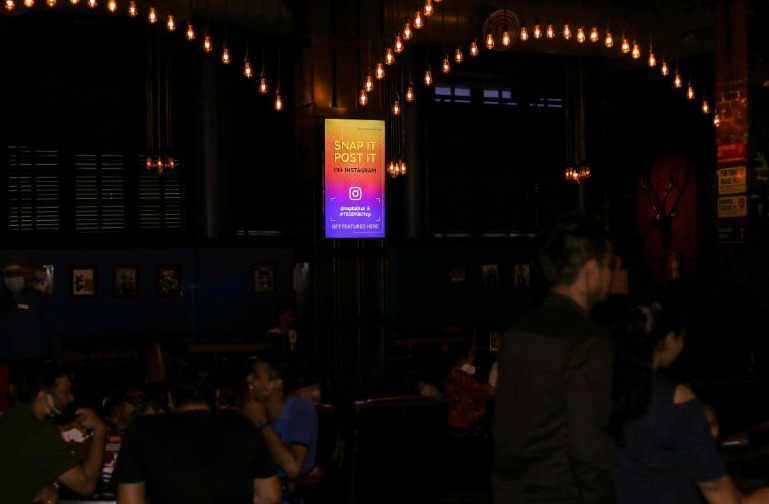
The audience, however, understood it immediately. They engaged, participated, and made the medium their own, eventually leading to over 70 million creators sharing content through screens.
That experience shaped my philosophy. Convergence doesn’t happen just by adding technology to physical media. It happens when DOOH is designed from the audience’s point of view; it happens when digital behaviour extends naturally into real-world environments.
You’ve spoken about transparency, automation, and standardisation in DOOH. What is the single biggest shift needed to move beyond a relationship-led approach?
Every market operates differently; some are technology-heavy, while others are relationship-led. Relationships have played an important role in building the OOH industry. But at scale, they can also introduce subjectivity.
I’ve seen situations where the most relevant media doesn’t make it into campaign plans, not because it lacks impact, but due to familiarity or legacy alignments. At the same time, much of the ecosystem still runs on assumptions from delivery to reporting, with limited standardisation.
The shift needed is from relationship-led selection to relevance-led decision-making, supported by transparent systems. Automation doesn’t replace relationships; it strengthens them by reducing ambiguity.
“When trust moves from individuals to systems, DOOH becomes a more accountable and scalable medium.”
As DOOH becomes more data-heavy, how do you ensure it remains audience-centric and emotionally meaningful?
“Data should inform creativity, not replace it.”
The most effective DOOH campaigns start with context; you really have to look at where people are, how they move, and what mindset they’re in. When data sharpens that understanding, it enhances storytelling. But when it dictates messaging mechanically, it just weakens it.
The thing is, emotion is what people remember. Data’s role is simply to ensure that emotion appears in the right place, at the right time, and for the exact right audience.
What excites you most about the idea of a unified global transparent layer for DOOH ?
“The broader shift toward greater accountability in a medium that is scaling rapidly is exciting.”
Globally, we’re seeing significant institutional investment flowing into the OOH and DOOH ecosystem, alongside a steady expansion of high-quality digital inventory across cities and markets. And at the same time, brands are increasing their spends; they are treating DOOH as a long-term, strategic channel rather than just a tactical one.
As investments grow, expectations naturally evolve. Big investments demand better accountability and control, not to change how the ecosystem operates, but to ensure absolute confidence in outcomes. Brands want assurance that a medium attracting serious capital is also maturing in how performance is understood and trusted.
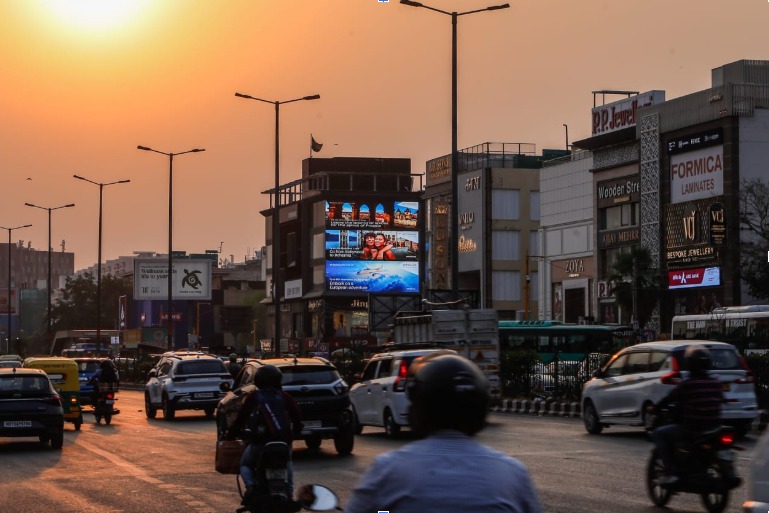
DOOH execution for Etihad Airways
Any move toward clearer alignment in how DOOH outcomes are viewed directly strengthens that trust. For the industry to sustain its growth, accountability simply must evolve in step with scale. That, to me, is the most encouraging direction for DOOH globally.
What aspect of the Middle East DOOH ecosystem holds the strongest innovation potential in the next 2-3 years?
Over the last decade, the Middle East, particularly the UAE, has evolved into one of the most visually sophisticated DOOH markets globally.
And urbanisation, infrastructure investment, and smart city planning have allowed DOOH to integrate naturally into the urban landscape.
This is reflected in economics as well; the region commands some of the highest DOOH CPMs globally, signalling the premium placed on location quality and audience environment.
But the thing is, the next phase of innovation lies in strengthening the supporting technology layer, bringing greater confidence to planning, execution, and evaluation.
“By pairing world-class urban infrastructure with stronger accountability systems, the region can set new global benchmarks for premium DOOH.”
For the next generation entering media and AdTech, what core instincts should they hold on to as automation increases?
One instinct, I strongly believe in, is problem discipline.
Much of today’s technology is built to solve problems that don’t actually exist in OOH. This often happens when solutions are created without understanding why the medium has endured.
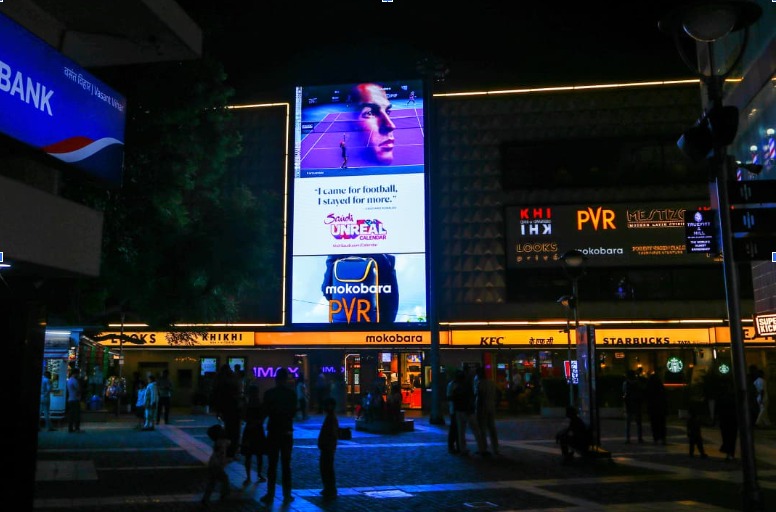
“OOH has evolved with technology but remains anchored to core fundamentals – reach, context, presence, and impact. That’s why brands continue to invest in it.”
Before adding new layers, it’s worth asking a simple question: Does this make the medium clearer, stronger, or more effective for the brand?
As DOOH networks expand and AI layers grow, what is the most underestimated technical challenge in delivering real-time, cross-border campaigns at scale?
“The most underestimated challenge is applying the right automation model to the right market while ensuring systems actually work together.”
In premium markets like the Middle East, DOOH is driven by certainty and quality rather than impression arbitrage. But the thing is, traditional programmatic models often introduce abstraction, intermediaries, and extra cost without proportional value.
Interoperability is a related challenge; disconnected systems make planning harder, reporting fragmented, and accountability much less clear, especially across borders. At scale, automation must reduce fragmentation, not add layers, for adoption to truly grow.